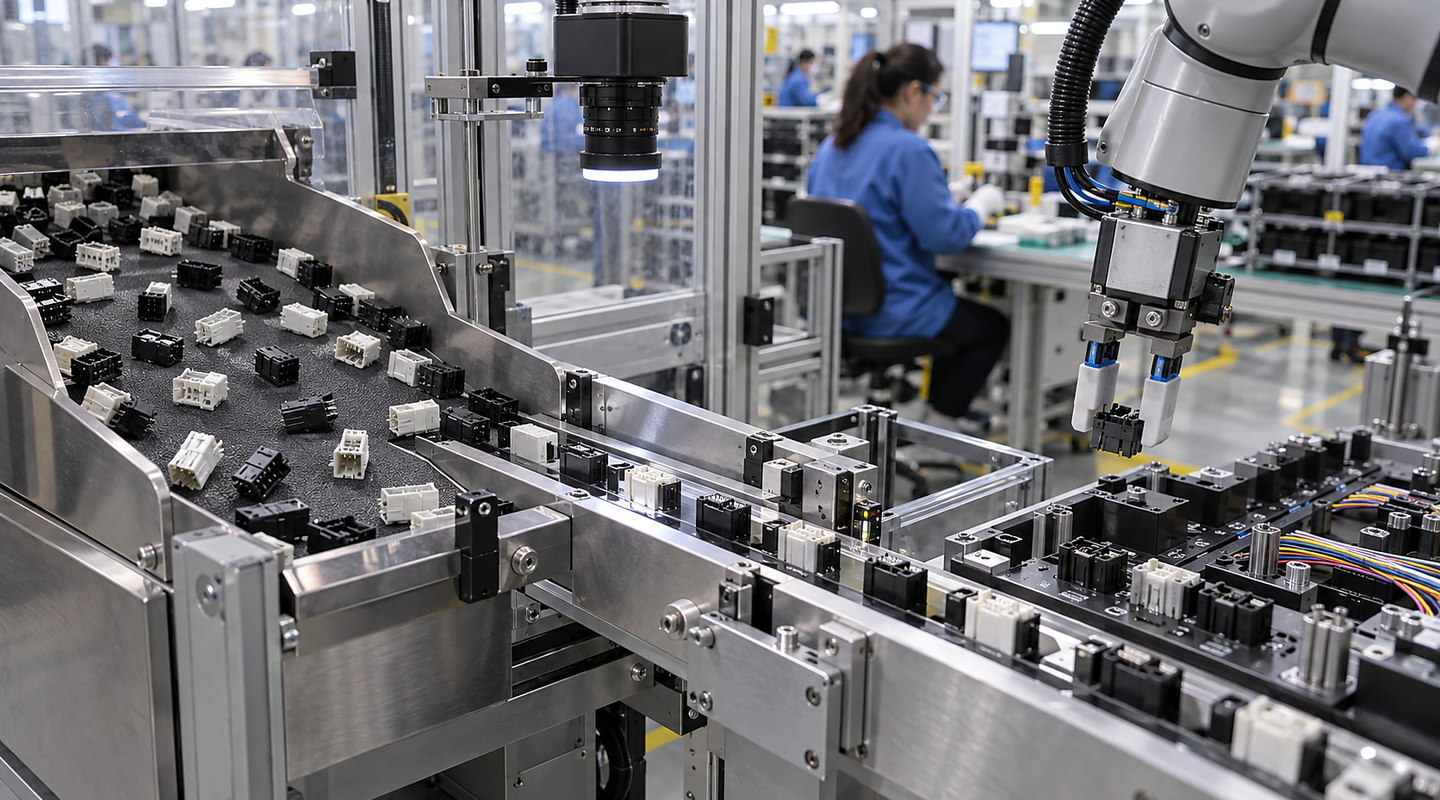
Flexible or Metered Delivery Involving Fuse Orientation and Presentation
Plan flexible or metered delivery involving fuse orientation and presentation around representative components, bulk condition and the downstream interface, line connections, operating limits, acceptance checks and next steps.
In brief
For flexible or metered delivery involving fuse orientation and presentation, start with representative components, bulk condition and the downstream interface and your full operating sequence, then check the credible component, presentation and delivery-rate extremes before committing to a final layout.
Plan fuse feeding systems around real component variation, bulk condition, orientation, usable delivery rate and the downstream interface. Discuss representative part trials with Sorting Solutions.
On the production floor
Plan for the conditions your team handles every day — Fuse Feeding Systems
Plan fuse feeding systems around real component variation, bulk condition, orientation, usable delivery rate and the downstream interface. Discuss representative part trials with Sorting Solutions. For flexible or metered delivery involving fuse orientation and presentation, the deciding details include component geometry and variation for fuse orientation & presentation, bulk condition and replenishment method and jam, damage and recovery acceptance checks.
Details worth resolving early for flexible or metered delivery involving fuse orientation and presentation
Question 1
Component Geometry and Variation for Fuse Orientation & Presentation
For flexible or metered delivery involving fuse orientation and presentation, describe the current position, required outcome, acceptable limits and known exceptions for component geometry and variation for fuse orientation & presentation. That lets us compare options against your real production rather than one nominal value.
Question 2
Surface, Fragility and Entanglement Behaviour
For flexible or metered delivery involving fuse orientation and presentation, describe the current position, required outcome, acceptable limits and known exceptions for surface, fragility and entanglement behaviour. That lets us compare options against your real production rather than one nominal value.
Question 3
Bulk Condition and Replenishment Method
For flexible or metered delivery involving fuse orientation and presentation, describe the current position, required outcome, acceptable limits and known exceptions for bulk condition and replenishment method. That lets us compare options against your real production rather than one nominal value.
Question 4
Required Orientation and Delivery Rate
For flexible or metered delivery involving fuse orientation and presentation, describe the current position, required outcome, acceptable limits and known exceptions for required orientation and delivery rate. That lets us compare options against your real production rather than one nominal value.
Question 5
Escapement and Downstream Pick Interface
For flexible or metered delivery involving fuse orientation and presentation, describe the current position, required outcome, acceptable limits and known exceptions for escapement and downstream pick interface. That lets us compare options against your real production rather than one nominal value.
Question 6
Jam, Damage and Recovery Acceptance Checks
For flexible or metered delivery involving fuse orientation and presentation, describe the current position, required outcome, acceptable limits and known exceptions for jam, damage and recovery acceptance checks. That lets us compare options against your real production rather than one nominal value.
Your operating cycle
Plan for more than automatic running
Include replenishment, normal production, planned change, short stops, fault recovery, cleaning and maintenance for flexible or metered delivery involving fuse orientation and presentation. A fast automatic step can still leave your team with a slow or awkward overall process.
Normal production and variant changes
Replenishment and material presentation
Operator access and safe interventions
Cleaning, maintenance and recovery
Prove the result
Test flexible or metered delivery involving fuse orientation and presentation against representative components and difficult bulk-presentation conditions
Normal production
Run the agreed product or part mix for flexible or metered delivery involving fuse orientation and presentation at your intended operating pattern.
Difficult conditions
Include credible extremes for component geometry and variation for fuse orientation & presentation and surface, fragility and entanglement behaviour.
Fault and recovery
Show how the proposed solution detects a problem affecting flexible or metered delivery involving fuse orientation and presentation, responds safely, informs your team and restarts under control.
Important limits
Be clear about what the trial has shown
Sample trials must include normal, marginal and supplier-variant components.
Quoted feeder output is not the same as usable delivery at the downstream process.
Fragile, flexible, magnetic or entangling parts may need a different presentation method.